Showing posts with label reviews. Show all posts

Oct 4, 2012

[Pirate101's Sneak Peek]

  ...Or more like 'Stress Test', going by the throngs of people swarming all over during the 6-hour window the beta was open to the public. Even so, the game was stable and ran fine for me, barring one random 'teleported into space' bug I found when exiting one of the class trainers' rooms.
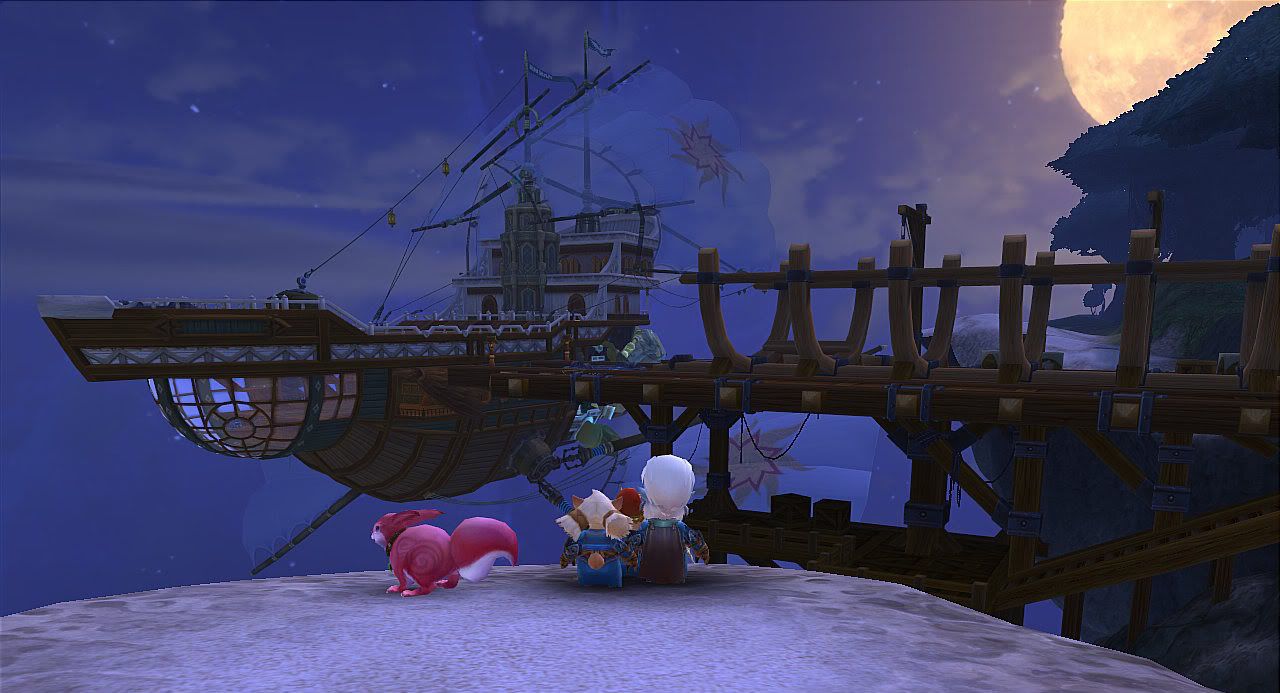
  I only had the time to play to the point where I received my first ship (level 4), but already I've been charmed by KingsIsle's latest take on their worlds of the Spiral. The naming system alone was pretty entertaining; just hitting 'Random' and seeing how many different piratey names you could get out of it was a lot of fun just by itself. Also, you get to design your own pirate flag along with your appearance! This is the sort of stuff I'm a total sucker for. =P


  KingsIsle has said that Pirate101 is targeted to a slightly older audience than Wizard101, and I do think that there is potential for more complex strategy in combat in P101, going by the little I saw at a early level. Once you engage an enemy, you are presented with a grid of the combat area, and you choose to either move your characters or use abilities across a certain range (basically like simplified RTS units). Once you choose your actions within the allotted time limit, combat will then play out on it's own. Besides straight one-on-one fighting there are also variables such as objects you need to defend for a certain number of turns or other grid objectives that may need to be completed before you can declare victory.


  Unlike Wizard101's card battle system, attacks in P101 are tied to your characters and their 'crew' (NPC party members). Depending on your pirate's class you have access to a set of varying skills, with the option of spending points you earn via leveling to acquire the skills of other classes. This allows you to hybridize your character in multiple ways. The classes you can choose from are Buccaneer as a melee tank, Privateer as group support/healer, Swashbuckler as a stealthy melee dps, Witchdoctor as a debuffer/summoner, and Musketeer as a ranged dps/trapper.

  As you progress you also collect a crew of NPCs that can appear on the board with you, and who have their own skills that you can train. Some crew members are unique to various classes, and complement classes in different ways.  Like in Wizard101, soloing should be viable throughout the whole game, even though grouping is very easy (simply run up to a fighting player to join in; loot and exp is automatically shared fairly).


 Personally, I love turn-based combat (which is one of the reasons I liked Wizard101) and it seems Pirate101 will offer some fun strategy RPG fare for both kids and older players who can appreciate whimsy and lighthearted humor in their games. The animation, art, and storytelling in P101 is very much improved over Wizard101 while still being familiar to folks who've played the earlier game, and is a nice mix of old and new for veteran players.

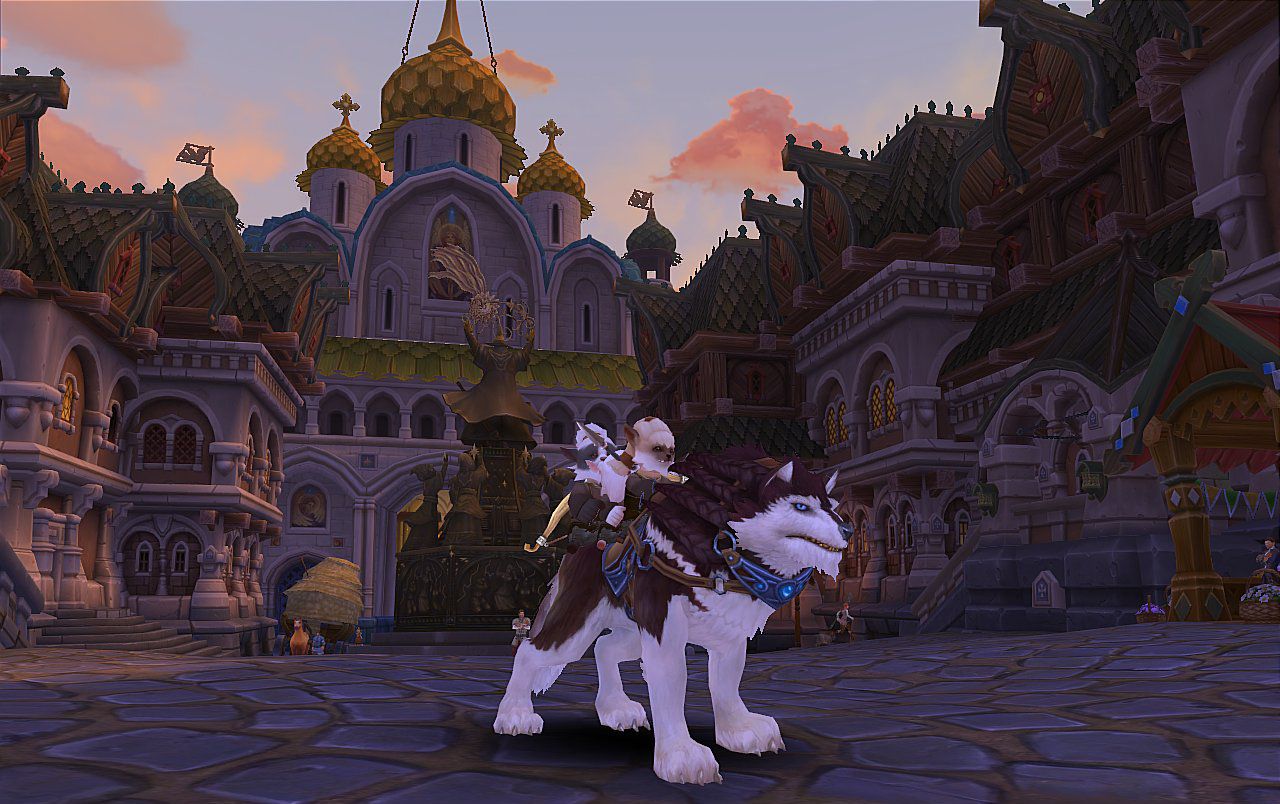
  The Crowns Shop in P101 appears to be very similar to the one in Wizard101, with mounts, armor, housing, pets, furniture, ships and ship gear (there is also ship combat in the game, though I barely got to try it out), and various buff potions available. In Wizard101, you could get everything you needed without spending real money and I played for nearly 4 years and only ever bought vanity stuff like mounts and housing stuff and never felt I was disadvantaged in any way -- and hopefully that will continue to be the case in Pirate101. One thing I always felt KingsIsle got right in their cash shop was that buying stuff from it always felt fun, rather than being something you were being forced to do in order to properly enjoy the game. As one of the first Western cash shop MMOs, it still amazes me how well they got things right back in 2008 when there are still MMO companies today struggling to figure out how to monetize their games without resorting to being predatory.

  Just like Wizard101, P101 utilizes either a 'monthly-fee plan' or 'buy as you go' system in regards to playing different zones past the newbie area -- for 10$ a month you have free access to everywhere at any time, or else you can buy individual zones for a set (lower) price. For slower/casual players, buying zones as you need them may be a better deal in terms of monthly cost; so technically P101 is more 'Freemium' than 'Free-to-Play'.


  The few hours I had with the game this afternoon went by pretty fast -- so I'm looking forward to Oct. 15th and the official release so I can put some more time into the game. But from what I saw today, Pirate101 looks like it'll be a solid, entertaining game for pirate-fans of all ages.

Sep 24, 2012

[Torchlight II Impressions]

In simple list form, since I'm not feeling verbose:

MY LIKES:
- New Game+
- Randomized dungeons\sidequests
- Offline Singleplayer option
- Character/pet customization (this includes class builds/gear combinations)
- Fishing. If nothing else, because you can get permanent pet-transforming items from it.
- The Enchanting/Alchemy system... gambling for cool item buffs is a great gold sink
- Interesting item sets (the randomization of stats makes even two of the same item unique)
- The soundtrack
- The boss fights

DISAPPOINTMENTS:
- I wish Normal difficulty wasn't simply Easy mode with a different name. It's too easy, even for a newb to the genre like me.
- I wish there was appearance slots for gear, or the ability to pay a Transmuter to re-skin gear.
- I wish my Stash space was expandable.
- I wish you could get at least one full respec of stats/skills per character.
- I wish the story/setting was a bit better explained (How's anyone to know, for example, that the Zeraphi and Ezrohir are a race of ancient Ember-powered cyborgs unless you read the official wiki? The game sure doesn't bother to really explain who they are or why they're at war). I know that too much story exposition can bog down a game like this, but it could've used a bit more here and there... perhaps rolled into the short animated cutscenes between Acts.

Overall, I give the game 4/5 stars (for what my opinion's worth), and recommend it for anyone who likes the ARPG genre. It's a solid offering and very enjoyable.

What is it about fishing in RPGs that's so compelling?

May 21, 2012

[Allods Online: 2 Years Later: Part 2]

[Go to Part 1]

  The first of the major changes I noticed (which was added to the game last year) is a new Tradeable Currency system. Basically, it allows cash shop currency to be sold for ingame gold. However, unlike most games who have this type of system, the exchage rate is set by the game itself rather than by players, based on how much of the tradeable currency (Gem Shards) is in the system at any given time. This automatic price control is an interesting way to keep monopolizing pay-players from price fixing the market. It also allows free players access to the cash shop without spending any real money if they so choose by basically letting them use their ingame gold to buy cash shop items. In the cash shop itself there is a tab that toggles the payment option for items between gPotatoes (the normal pay-currency) and Shards.

The Shard/Gold Exchange

  One of the things I tend to regularly buy in F2P games are mounts, so this aspect of the cash shop was another new thing for me (since I had stopped playing the game before they were released). The system in Allods Online is a bit unique, in that in addition to being able to acquire multiple different mounts, they can also be leveled up and reskinned. Mounts (and various different skins for them) are available as special event prizes, lottery box items, and stand-alone cash shop purchases. There are also character costume sets and even (for some reason I don't even want to speculate about) an entire tab just for underwear.

Fluffy hats!

  Another interesting mechanic added since the game's release is the Reincarnation system. Basically, after doing a series of quests, high-level players can unlock the ability to create a linked alt (Incarnation) that will share various items and bonuses with their main character. Besides the money-saving aspects of not having to buy new mounts, bag upgrades, etc., both characters can learn one of the abilities from the other's skill set that otherwise their class would not be able to, which opens up some interesting class customization possibilities.

  However, something I discovered as I was playing the game, is that once again there is a cash shop drama brewing, this time around an upcoming addition to the game's Patronage system. To explain: Characters all have a 'Patron Saint' that bestows temporary stat buffs and healing skills when a certain item (Incense) is used. These buffs gain experience through use and can be upgraded to be stronger via quests (up to level 4). The upcoming addition of a fifth level that can only be earned after enough of a certain cash shop item is bought is upsetting many players because the real-money cost for enough items to reach this rank (which appears to be mostly important in endgame PvP) would equal hundreds of dollars. Many people are angry over the 'pay 2 win' aspect of this mechanic, and I can see their perspective. For some reason, even after two years, the cash shop in Allods seems to periodically experiment with a new game mechanic added specifically to force players to spend money. Even though in every past case such mechanics have ended up eventually removed, the bad feelings they inspire linger on.

At level 23, my Patronage Level is 3.

   I have to admit I really don't understand the coercive attitude the Allods devs seem to keep falling back on when their game could be so much more popular if they simply advertised it's strengths (like their really neat Astral Ship content where players sail in search of bosses to fight as well as engage in ship combat with the opposite faction) instead of periodically trying to gouge their most invested players. Time will tell if the game eventually resolves this issue the same way it has fixed it's past monetization mistakes, but even so it's sad to see yet another example of the game's community being upset by a cash shop decision. Making your players feel like they're being taken advantage of is a big FAIL for any F2P game, whether or not that perception is accurate. It's also funny that at the same time when I decide to come back to give Allods another try after hearing about so many good additions to it, that this happens again. =P

Player-crewed Astral Ships can discover new lands and treasures.

  In conclusion: For those who still enjoy a 'classic' quest-based F2P MMORPG, Allods Online delivers a solid PvE experience with lots of nice features and the game does a lot of things well, so I recommend trying it out for those reasons alone. But in the end I'm left rather conflicted -- on one hand there are many things about the game I think are fun, but in a F2P MMO being able to trust that you won't be punished for not paying 'enough' (or at all) is very important, and I don't feel Allods has that trust. Therefore, I can only recommend it for casual/PvE players since I think that most serious min-maxers or PvP-oriented players will end up frustrated at the endgame unless they don't mind paying the costs (in grind and/or money) to reach the top level of performance. The majority of the cash shop is, in my opinion, fair to the casual player who is not too hung up on staying on the bleeding-edge of the power curve.

After two years Allods Online has grown a lot and I really think it's one of the better F2P games out there. It's just a shame that instead of finding a synergy with it's cash shop, it seems to still struggle to find a balance between profit and playability, even after all this time.


Related Reading:
An Allods Online Beginner's Guide

May 18, 2012

[Allods Online: 2 Years Later: Part 1]

Allods Online was one of those cases of poor F2P monetization decisions on the part of devs ruining what could have been a very good thing. During it's (cash shop-free) beta period, many MMO bloggers praised it's beautiful art design, airship combat and exploration endgame, and solid (if not wildly innovative) gameplay. There were dungeons and PvP, and quests, and the world was done in a familiar yet still enjoyable fantasy style with a Russian twist.


I myself enjoyed the time I spent in Beta, which was up to about level 20, and as Allods was my second foray into F2P MMOs (the first being Mabinogi, whose cash shop I rather liked and which had given me a positive first time F2P experience) I was not overly worried about how things would play out at release as much as some of the folks for whom this was their first try at this new payment model. It seemed as though many longtime sub-model MMO players were giving Allods a try at a time when F2P was still a fairly radical concept, and they were actually enjoying it!

And then release came around, and the cash shop was unveiled, with ludicrously high prices, and blatant 'pay to win' items. And then right after, there were patches to nerf character combat strength and buff death penalties to the point where it was impossible to play unless you were regularly buying items from the shop. PvE was made agonizingly slow for nonpaying players since now it took unreasonably long to kill even one mob unless you had the cash shop buff, and dying would literally leave your stats so reduced from the rez penalty that the game was basically telling players to 'either pay up or log out'. The promising Beta which had engendered so much positive press was exposed as a blatant bait and switch, and many MMO players who were for the first time trying out a F2P game had all their worst fears about the model justified.


Player outcry was immediate, and the hype turned bitterly sour, permanently damaging what I feel could have been one of the first mainstream hit F2P MMOs at that time. The devs basically tripped right out of the starting gate and fell squarely on their faces. The stigma from those first few months after launch has remained ever since, even though the game has apparently been doing fairly well and has released regular content updates and new features even with a reduced playerbase. Allods Online seems to be on a permanently low-key profile nowadays and many folks seem to avoid it because of it's sins from two years ago. But I had heard recently that things had changed in the past year and a half, and that both the cash shop and the game had been adjusted and balanced for some time now, with the hostile game mechanics that tried to punish players into spending money having been discarded long ago. So I decided to hop back in and see what (if anything) had changed in the cash shop since 2010.

[Go to Part 2]

Jun 22, 2011

[Eden Eternal Impressions]

Eden Eternal is the latest MMORPG offering from Aeria Games, and has a lot of unique features compared to most of the current F2P market in the U.S. It's very polished and offers many 'quality of life' features that I haven't seen in the other F2Ps I've played, and after participating in the Closed Beta I've come away really impressed so far.

First off, the graphics of the game are in a colorful, hand-drawn cartoony style, down to the 'pencil lines' present around objects (which I've see done before in other F2Ps, but never as seamlessly as in EE). This gives the game's look a very pleasing, distinctive style.


The core gameplay feature is unlimited multiclassing -- you can eventually unlock and switch between every class in the game freely, which eliminates the need for making multiple alts in order to try out different playstyles or group roles. As you level different classes, you unlock 'Certificates' which are items that can be mixed and matched across classes that offer passive bonuses of various kinds. On top of that, each class has it's own skill tree where you can allocate points to further customize your character. I think this is the number one draw the game has, hands down. Bored of being a tank? Transform into a Bard or Thief and try out a whole new build and set of skills! One gameplay aspect that doesn't seem to be in EE is crowd control, instead most classes have aoe abilities and can take on multiple enemies at once, at least for a short while.

Skill tree and Class Certificates
Besides at-will class switching, your appearance ingame is not affected by your gear at all. Instead, each class unlocks various 'Outfits' as they level up, which can then be dyed to your liking with colors that are buyable at low levels ingame, but only available through the Cash Shop once you hit level 25 (though as with most F2Ps, nearly all Cash Shop items are sold in the game's Auction House for ingame money by players as well). The Class Outfits are also nicely detailed and stand on their own just fine if you're the type who doesn't really care what you're wearing.

An unusual 3-person dungeon
The main sources of exp in the game are PvE quests and dungeon-running. If you're the sort who plays MMORPGS in spite of the genre's gameplay (which consists of killing monsters to level and get loot), then there won't be anything thrilling here. But for those of us who enjoy mowing down mobs and accumulating shinies of various types, it's handled very smoothly in EE. The zones are lovingly detailed, even though they are small compared to many other games', and there are a wide variety of different locales. I actually appreciated the 'smaller with more character' approach to zone design, since so many other games boast 'vast worlds' that are mostly barren land without anything interesting to see or find anyway.


One of the social tools EE has that I think is neat, is the Profile system, which takes the old /who mechanic to a new level. You can fill out your profile with various personal info (including general interests) and top it off with a few sentences about whatever you feel like, and enable it to be visible whenever others do a player search on the server. I appreciate the concept of trying to help more likeminded people find each other ingame, and putting some personality into the mechanic. There is also a LFG tool, but it's rather clunky and isn't really used by most people that I've seen (most people ask for groups in Zone chat instead).

Character profile
One thing I almost feel is a drawback, is the speed at which you level (at least up til level 30, which is my current situation). It's very easy to completely outlevel the quests in your current zone, especially if you are doing the simple grind-based 'guild quests' to level up your guild (more on that in a moment). As a completionist, I was actually happy if I died and lost (a small amount of) exp, since the stuff flows like water. With the current level cap being 50, I'm interested in seeing how much slower levels will go as I get closer to it. As it is, leveling goes as a fast clip, with the only restriction on how many classes you want to level simultaneously is time, money to level up class skills, and the bag space to store weapons and accessories for each class when you switch over.

Guilds in EE have levels that influence whether they can have a customized guild emblem or guild town. Guild towns offer the entire server valuable services, as they're the only sources of high level crafting recipes and materials. Guild leaders choose to 'hire' certain vendors for a weekly fee who then are available for anyone who visits that town to use. There are also rare 'traveling merchant' NPCs that appear from time to time with other things to sell. Guilds can set their own tax rates for their wares and services, with the profits from sales going into a guild fund. There is also a guild vault, quest board, and other little town perks available for guildmembers (including the ability to place statues of guildies in the town square). Besides having their own chat channel, the basic guild window also has a Message tab where members can post notes about various things to each other, which is pretty handy. There are future plans for GvG PVP as well, I believe.

Desert-themed guild town
 I'm finding I'm enjoying these 'gamelike' MMOs more and more, mostly because I'm burned out of believing the hype endemic in Western MMOs claiming 'immersive, persistant fantasy worlds' which has to my experience NEVER actually panned out. In the end gameplay is king, not lofty ideals about 'immersion', 'photorealism', and complexity which never seems to serve any purpose but add drudgery to the play experience. I like killing monsters will flashy spells, grouping with people to fight bosses, decorating my character, and collecting cool items, and Eden Eternal offers all of those things wrapped up in a colorful package, which makes it a winner for me. And really, why do so many players seem to DEMAND that all MMORPGs be so huge that they can play them for 10 years straight without ever getting bored? Is the common Asian F2P model of designing most games with only a 2 or 3 year shelf-life bad, or does it instead encourage players and developers to try out new things more often? My personal opinion is starting to shift towards the latter.


Eden Eternal is a pretty game with some fun ideas, and worth checking out. After all it's free, so there's no harm in giving it a chance and seeing if it works for you. =)

Pros:
Art style
Switching classes at will
Guild towns
PvE dungeons \ raid bosses
Fast leveling til about lv38 or so
Unique selection of player races to be released in the future
A fair cash shop overall (imo)

Cons:
Smaller scale world and scope
Music is rather meh.
Typical MMORPG gameplay (kill stuff, get loots)
Crafting is time consuming, risky, and expensive
Mostly random color dyes in the Cash Shop
Gets grindy to level once you get around lv40
At higher levels it becomes harder to multi-class without using Cash Shop exp boosts

May 3, 2011

[Spiral Knights Review]

  The first videogame I really fell in love with was Secret of Mana on the SNES. I remember going over to my friend's house and playing it with her for hours, and being sad that the sequel never game out in the states. It was pretty much the catalyst for my beginnings as a gamer. Since then, I've always had a special affection for Action RPGs. So when I heard about the recently-released FTP Action RPG MMO Spiral Knights, I decided to check it out.

  The simple story behind the game is that a spaceship filled with robot Knights has crashed on a weird planet that is made of giant rotating gears and embedded with the fragments of dozens of different worlds all patchworked together. At the Core of this epic machine is a mysterious power source that the Knights hope to be able to harness in order to repair their ship. However, no teams sent down to investigate have ever returned. So the refugees set up a more aggressive operation to equip and send fighting squads to the center of the planet and discover what's really down there.

Character creation screen -- pretty basic.
  Initial character creation is very simple. You pick two colors for the armor style of your choice, and that's it. Your 'Personal Color' is applied to your floating name as well as to accents on most armor that you'll equip. There are also appearance-only slots for armor sets, so there is some customizability in your appearance beyond just color scheme.

  The basics of the game are easy to pick up -- you start out in an instanced tutorial zone and 'newbie camp' where you can do some easy dungeon runs and figure things out at your own speed before heading to the real world hub of Haven. Once you reach the main world, you receive some basic objectives (there are no real 'quests' per se) and are let loose to explore the Clockworks' dungeons however you like. At this point it's best to experiment with different weapon styles and choose which one you'd like to focus on -- Swords, Guns, or Bombs, or a mixture of these. Fine tuning your gear and weapons to both your own playstyle and the dungeon levels you are planning to enter are the key to success (and fun)!

Crafting window, listing mats and costs required.

  Crafting simply consists of acquiring a recipe for a certain item, and having the right materials to create it (there is also a Crown and Energy cost). Whenever an item is crafted, there is a small chance that it can be a Unique Variant; an item with a special bonus ability or stat. UVs can be either useless or amazing, but the getting the right combination can mean lots of profit if you choose to sell rather than equip it yourself. Crafting materials are abundant drops in dungeons, with different types being linked to certain level themes (for example fire-themed materials are common in fire dungeons).

Fighting in a Beast-themed dungeon.

  The themes of different levels are an important factor in both your armor and weapon choices. Different monsters have varying strengths/weaknesses, so mixing and matching gear to counteract attacks while dealing damage effectively is a necessity. There are no limits to how many different types of armor and weapons you own, an you can switch gear around as needed every few levels, so it pays to have multiple choices at hand. SK purposely goes out of it's way to obfuscate the math behind stats and bonuses in a sort of 'anti-min/maxing' measure which nice, being that I've experienced the other end of the extreme in other games and don't really enjoy it anymore. In other words, you CAN optimize, but not doing so 100% won't totally ruin you, either.

Map of dungeon levels, with grouping options.

  Dungeons are modular, with different levels rotating every few minutes, changing the path of your descent. Aside from the few 'premade' dungeons, players can create new ones by depositing crystal pieces that they find into different hoppers, which then combine to form new levels over time. The actual layouts of the levels are reminiscent of classic Zelda, with keys, locked gates, switches, breakable objects, and simple puzzles interspersing all the hack-and-slash. Using the different terrain to your advantage is a good idea, since some areas can kill you quickly if you just rush in without thinking.
  Grouping (or soloing) is very simple. You can choose to join any existing group already in a dungeon you want to try out, or start your own group. You can lock groups to 'friends only' or even run solo, if you're confident enough. The deeper down you go, the better the rewards and the harder the challenge.

Combining ranged attacks on a cannon.


  The cash shop portion of the game consists of buying Crystal Energy refills, and there are several options available, starting at $2.50 and increasing from there depending how how big of an Energy junkie you are. There is also a Marketplace where players sell their Crystal Energy for  Crowns (the ingame currency), so paying with real cash is not really required. It's also possible to barter Energy with other players. In general, it's feasible to play the game casually without spending any money at all, though folks with a more hardcore approach will have to either spend a few dollars, or plan ahead to maximize efficiency of their Energy use. Otherwise, each player gets 100 free units of Energy every day -- with one unit recharging every 13 minutes.

Buying Energy with ingame money (and vice versa).

  I've heard this game described as having many elements in common with games like Legend of Zelda: Four Swords Adventure and Final Fantasy Crystal Chronicles. If you are a fan of ARPGs in general, or even just a casual MMO player, I recommend giving Spiral Knights a try.

Related Reading: Interview with SK's lead designer, Nick Popovich.

Dec 24, 2010

[Divinity 2: Dragon Knight Saga Demo Review]

My attention was recently drawn to this re-released action RPG, Divinity 2: The Dragon Knight Saga. This game originally came out sometime last year, with the subtitle 'Ego Draconis', and was generally described as a good game hindered by various balance issues and technical bugs, which have apparently been addressed in the new 'remastered' version (which also comes with a bundled expansion pack). A new demo of the game was released as well, so I figured I'd try it out and see how I liked it, since I've never played any of the modern western-style action RPGs (I know, the horror!). I've never had a PC capable of playing one, frankly. Since Divinity 2 has been compared to respected games like Baldur's Gate and Ultima, I figured it would be a good game to start on!


The game starts you off with character creation, which is basic but adequate. You can choose your gender, face, hair color, voice, and some minor facial decorations (none are all that different from each other, but just enough to add a bit of personal taste to your avatar). Then you're dropped into a tutorial zone, of sorts, and initiated into the ranks of the Dragon Slayers -- a military order that hunts down and kills Dragon Knights (people who have the ability to transform into a dragon). The reasons behind this vendetta is based on a betrayal by a Dragon Knight more than half a century ago that resulted in the death of the world's Divine, a savior-like figure. As a result, nearly all Dragon Knights have been killed by the time your character starts their journey.


 Since I just d/led the game without reading the manual or any FAQs ahead of time, it took be a bit to figure out how to add skills/items to my hotbar and some other minor controls, but overall I got the hang of things fairly quickly. My biggest issue was not being able to see the crosshair in certain areas, which may just be my own crappy vision problem. =P Also, the lighting of the early part of the second area you visit seemed really murky orange (I guess it was supposed to be early morning?) but that may have been because I had to play with graphics set to Medium, only having half the RAM required to run graphics on high. Once it became daytime proper though, the lighting became much better, which improved the color and sharpness of things overall. Once again, the problem with the low contrast might just be me (maybe I need to get my eyes checked).

The first thing that I really had fun with was the 'Mindreading' ability you get right at the beginning of the game. It lets you pick the brains of various NPCs, which can give clues to hidden items, quests, and other useful info that you'd otherwise not have access to. Of course, sometimes you just hear pointless babble, too. Realizing, for instance, that a particular shopkeeper is desperate for business can get you better prices on his wares. Or you can learn someone's dirty secret and either blackmail them or turn them into the authorities.


In general, the quests in the game are very diverse and some even have multiple options for completion (or even failure). I also liked how you get several choices for quest rewards, from extra experience or money to items and weapons. Besides the main storyline quest, there are lots of sidequests and hidden quests, so that exploring every nook and cranny and talking to everyone you meet almost always pays off in one way or another. You can also invest in a 'Lockpicking' skill to access various locked doors and boxes that you come across. One always gets a sort of evil glee in rifling through boxes/chests/closets in people's houses looking for stuff. =)


 In terms of character development, there are 5 skill trees (with 3 combat styles) you can invest Skill Points in when you gain levels. The combat types you can specialize (or hybridize) with are Mage, Warrior, and Ranger with secondary 'general purpose' trees with abilities like Fear, Stealth, or summoning spells to call helpful undead to aid you in battle. Every time you level up, you get points that you can spend however you like in both your base stats as well as in your skill trees (and for gold you can also respec if needed). Combat is action-oriented, with targeting and dodging done by the player, and what seems like a 'soft lock' mechanic for ranged skills.


The game has great music, and decent voice acting. I generally hate dubbing in games, but Divinity 2's are not grating to listen to like in some other games.

The demo ends with your character obtaining the 'curse' of a Dragon Knight, which is the true beginning of the story. Even though it's just a few hours' worth of play, the demo really packs a lot of the flavor of the game and shows many of it's features while hinting at others to come later (like the ability to craft your own undead minion). I will admit that I have not played many western PC RPGs, so for all I know the game could be full of genre cliches that seem novel just to me, but either way I really enjoyed my short time in Rivellon and I'm planning to get the full game for sure. I really liked being able to find hidden areas/quests, exploring the beautiful landscape, and the different strategy and playstyle options the game has. The fact that Larian (the game's creators) are a smaller studio just makes what they've accomplished with this game even more impressive, imo. I recommend trying out the demo at least, if you are in any way a fan of singleplayer RPGs.

Jun 16, 2010

[Ether Saga Online Review Part 3: Gameplay]

[Part 1] [Part 2]


PvP:
There are several 'open PvP' and PvE realms on each server. Groups of guilds ('Clans') can make formal Alliances with each other and fight other Alliances for control of specific regions of the game (details about territory wars are here). Winning 'dominance' over a region awards Alliance members special mounts, items, titles, etc. There are generally three or four top Alliances that actively compete per server. Towns and some quest hubs are 'safe zones' where PvP is prohibited. Until you reach level 45, you can't participate in PvP outside of duels, and the more you kill other players, the higher chance you have of dropping items when killed. More details about the PK system are here. Different realms have different PvP and PvE events that occur on them periodically, which are announced gamewide.


Cash Shop:
There are typical F2P items in the shop: vanity outfits, inventory expansion items, mounts, and items that improve the chances of successful gear upgrading and pet melding. The Cash Shop mounts range from 10$ to about the same as a Sparklepony, but they only barely travel faster than running. They're mostly a decorative item it seems, and since you can get basic mounts with ingame money (as well as getting ones as quest/PvP rewards), shelling out real-life cash for one isn't really necessary.
Some of the CS prices seem kind of high, at least compared to other F2Ps I've played. My usual budget for a F2P is around 10-15$ a month, which would allow me to get a few convenience or fluff items a month easily, however in ESO stuff like outfits would be much more of a once-in-a-while splurge. So far, the only thing I've felt I HAD to buy was a Mystery Pouch (which is a one slot item that stores crafting materials and such outside of your main bag, which is a big help since bag space is limited).


PvE:
There are five main types of quests in the game:
Training Quests (Gold): The 'main storyline' quests, which should be done first.
Fate Quests (Blue): Grind quests, basically. Good for making up the xp you've lost after dying, to hit a certain level to do the next Training Quest, or just want to kill stuff for a while.
Basic Quests: A rotating selection of quests available on bulletin boards in town. Some give special rewards.
Adventure Quests (Yellow): Quests that have to be completed in an instance dungeon.
Ethyr Quests (Green): Quest chains that reward you with a new class spell at the end.

Quest flow is practically nonexistant. Many send you to the same place at different times, different quest chains that cover the same 'storyline' are not grouped together and so you end up backtracking and wandering all over the place a lot. The problem is lessened if you stick to Training Quests as much as possible, but for completionists like me it can be a bit maddening. Positively, there are way more quests than you really need to level and they're generous with exp, so you can easily afford to skip the most inconvenient ones. The irony is that mobs lower their chance to drop items the more you outlevel them, which includes quest drops, so putting off some quests for too long can make them hard to complete if you outgrow the mobs too much. Having a healing pet is vital if you want to solo some quests easily (this may depend on your class; right now I'm playing a Mystic which is not a heavy armor class).


Overworld quests are not hard, and the majority are just grind to be honest. But non-elite mobs die so fast, it really doesn't feel that bad. Some quests give an item as a reward called a 'Possessor', which is basically a bot that you can set up to kill things for you while you chat or whatever. At first I didn't know what to make of a game that has botting built-in as a game mechanic, but for some strange reason it works in ESO. I wonder if the huge number of mobs + Possessors was intended as a way for 'normal' people to be able to compete with goldfarmers and therefore not feel like their game is being ruined by them? I will guiltily admit it's kind of nice to be able to farm stuff overnight while I sleep in real life. Of course, 'Possessing' on a PvP server is something you do at your own risk. You lose 5% of your exp each death, but you don't lose levels and can easily gain it back again.


Community:
Completing Adventure Quests seems to be difficult when you're starting out. There is no global LFG channel or tool, which makes finding groups when you're a newbie pretty hard. There is no global chat unless you're a member of a Clan/Alliance or buy the privilege via the Cash Shop. So for someone just starting out, it can be a bit lonely. Many of the guilds advertising on the official forums have minimum level requirements so it'll be a bit still before I can start shopping for a clan of my own. Until then, I'll have to be content with soloing and trying to make new friends as I meet folks along the way.

The community is helpful on the forums, where it's easy to ask questions and get tips if you're a newbie. Meeting people ingame is harder, but I find that to be the case in most MMOs when you're starting out, especially ones as solo-friendly as ESO. I think if more F2Ps had functional LFG systems ingame it would be a big improvement -- most of the ones I've played have little to no way for people to easily connect with others who need/want a group. Not sure why that is, to be honest. The most populated realms are the PvP ones (Realm 8 in particular), and since you are safe from open PvP until you're level 45, they're a good place to start on if you want to meet people.

Technical Issues: There's also periodic lagging and some minor bugs, though nothing gamebreaking that I've experienced so far. Translation is also bit clunky and inconsistant, but since the story isn't a very important part of the game, it's not a big deal.

Overall, the game's strengths:
Beautiful, colorful world and art design
Pet System
Open PvP (if you're into that sort of thing)
Ability to solo dungeon bosses if you make the right gear
Solo-friendly
Auto-travel (click NPC names in quest log, etc and walk there automatically)
Easy to get into

It's weaknesses:
Grindy quests, which is a shame because the environments are so interesting, you'd think there would be deeper stories around them.
Item enhancement/pet capture attempts fail very often, which eat up mats (and add cost).
Quest drops are affected by the 'anti farming' mechanics
Hard to make ingame money starting out

Ether Saga is not an 'immersive roleplaying world' by any stretch (and it doesn't try to be) but it's still a pretty fun game. It's a 'RPG' in the same way Pokemon is, rather than the way Everquest II (or even WoW) is. Which isn't necessarily a bad thing, depending on what you're in the mood for. If you're highly allergic to grind, and want a MUD-based serious RPG, ESO isn't going to fit that bill. But it's a cute little game that's easy to get into and has some fun elements that can get surprisingly deep if you want to get serious about them. If anything, it's worth a try (I'll be sticking with it for awhile, since I'm on yet-another WoW hiatus).

Jun 11, 2010

[Ether Saga Online Review Part 2: Pets]

[Part 1 is here]

Since money is pretty tight at low levels (item drops sell for only pennies to NPCs, since the game has a player shop system), some early quests will helpfully give you the basic items you need to start taming monsters. Pets can be used as stat-boosts for their owners as well as buffers/healers and tank/damage roles. Each monster 'family' has different strengths and weaknesses to other families, so knowing what you're going to be going up against helps in deciding which pets you want to use in a given situation.


Monster taming and Melding is one of those things that is simple on the surface, but can get complex if you're aiming for a specific combination of stats. I had a sinking feeling as I remembered how 'selective breeding' for the best stats in Pokemon was a serious obsession of mine, and I think ESO's pet system is similar enough to present a real threat to my free time. =P

Pets have the basic atk/def/etc combat stats, a certain number of skill slots, an elemental affinity (or not), a personality type, and a certain 'growth rate' that affects how much certain stats will grow each time the pet levels, which varies between individual monsters. Since pets can be 'Fused' to a player to serve as a type of stat boost as well as being used as a combat ally, there are different strategies involved in pet Melding depending on what you want to use the final pet for. Since their personality affects stat growth, you want those to match, too. Catching several of a type of monster, sifting through them for the best individuals, and then Melding them together in order to end up with a superior custom pet can be an entire 'endgame' in and of itself. And ON TOP of all that, is that whenever two pets are Melded, there is a chance for an Appearance Mutation to occur, which can result in you getting a monster that's impossible to tame from the wild. There are several guides on the official boards that go deeper into the min/max aspects of Melding, as well.

I'm still too low level (and poor) to get into serious high level pet development, but I'll be experimenting with some simpler aspects to get a better feel for how the system works in the meantime. So far it looks like it could be pretty fun for a former Pokemon addict like me.

Next up: my thoughts on Ether Saga's general gameplay, cash shop, community, and related miscellany.

Jun 8, 2010

[Ether Saga Online Review: Part One]

Leala over as Spouse Aggro was talking about how cute this game was, so I ventured over to the official site to check it out. It has tameable combat pets! So I had to give it a try. =P

Ether Saga is a Chinese F2P MMO based on The Journey to the West with a lot of neat little pet features: Pet taming (you can go out into the wilds and capture various monsters), Pet Fusion (where you combine with a pet to gain stat bonuses), and Pet Melding (mixing two pets to create a new pet with improved stats). Plus, there are special items you can get that can allow you to become a monster yourself for a time and benefit from special attributes. Sounds fun!


Character creation is very sparse, but the designs are pretty, so I didn't mind too much. There are three races: humans (Ren), demigods (Shenzu), and animals that were given humanity by the gods (Yaoh). The three are basically identical except for appearance options and starting pets. Based on your character's race/birthday, you get unique skills every 10 levels. I chose a Yaoh as my first character, because of their nifty fox pet.

Upon appearing in the starter zone, the first NPC I met gifted me with a large package of free potions, food, and a present that I can open at level 5. Nice! Plus, the NPCs speak Chinese when you click on them, which I love (the Russian emotes were something I really liked about Allods Online too).


I started exploring the UI, since that's what I always do first in a new game. I found that you can't reduce the UI scale (booo), or adjust/remove chat boxes, which was kind of disappointing since they take up a lot of screen space. But I also found that there's vanity gear slots (woot!) and that I already had a set of 'for show' clothes that I could toggle on and off from the paperdoll window. Also, you can apparently rate other players up and down (from a menu that appears when you click on them), which interesting way of giving public reputation to players. There's apparently PvP and the ability for guilds to control certain zones (going by the global messages I keep seeing) but I have yet to look into that aspect yet. Apparently, killing equally- or higher-leveled players has a chance of dropping loot for the winner, which is interesting. There are also timed server events of various kinds going on regularly, and the game keeps you posted about what's happening in the world at any given time.


The newbie zone quests are really friendly: I got a (pretty!) free armor set, various potions and +XP items, a second pet as a quest reward, and one timed kill quest even gave my 5 levels worth of xp in a single turn-in. One downside for some people may be that the countryside is literally swarming with mobs that repop almost instantly (an attempt to minimize the impact of farmers, perhaps?) -- I actually turned off monster nameplates just so they weren't such an eyesore because really, the game is beautiful to look at. The visuals remind me of The Secret of Mana's artstyle, which I like a lot. Quests are pretty much basic 'kill stuff' types, which I personally don't mind at all (I have a pretty high grind tolerance, especially when the mobs only take like 2 seconds to die). Translation is another thing that's a bit clunky in places, and the storyline is a bit hard to follow, but I doubt there's an epic novel going on here, even in the original language.


Once I hit level 15 (levels have come quickly in the first few hours I've played), I can begin taming wild monsters as pets, which is the main gameplay aspect I want to try out. I'll be focusing on that in part two.

Feb 18, 2010

[Allods Online First Impressions]

So the Russian Free-to-Play MMORPG Allods Online went into Open Beta on the 16th, and I decided to check it out, since what I'd heard of it before sounded kind of interesting. I've been on more of a 'casual playing' kick since my WoW hiatus, and F2P games like Mabinogi and Wizard101 have been filling my time rather nicely, so I figured I'd give a new one a go.


I have to be honest, one gets a real WoW-vibe when first starting out, simply because the art style of Allods is very 'hand-drawn' as well. The game world is simply beautiful, and very impressive for a F2P game. The soundtrack, however, is pretty generic western fantasy-MMO fare, and pretty forgettable. I know many people often prefer their own soundracks anyway, so that's not a big deal. There are also many similar UI and 'quality of life' mechanics that are the same between both games (like a quest tracker, Auction House, talent trees, etc) but Allods puts it's own mark on these now-familiar aspects that many people consider 'standard' in their MMOs now. One thing I actually did NOT miss was a minimap -- I find that I tend to stare at the little dots on it more than I actually look at the gameworld around me if I have one, so Allod's simple compass and well-marked worldmap were good enough for me. =)


The classes in the game are also a nice mix of familiar roles and archetypes with enough unique spin added to still make them interesting. Add to that the various talent trees and unique racial skill combinations, and you have many diverse customization options for your character.


The game has two PvP factions -- the lighter, fantasy-themed League and the darker steampunk-style Empire, and each has their own unique selection of races. There are two human cultures, a fairy/elf race, the Arisen (zombie cyborgs), Orcs, and the token 'goofy, short race', the Gibberlings (which look like a mix between hamsters and feral kittens). A fun aspect of making a Gibberling character is that you actually end up customizing and naming three individuals who then act as one unit (because Gibberlings as a culture always do things in groups).


The stand-out endgame option that Allods Online has is it's Ship-to-Ship combat in the areas between the allods (world islands). A minimum crew of 6 players controls each ship, with one player manning guns, another navigating, etc. Groups can pilot ships to allods that are inaccessible by any other means, and then explore and accumulate treasure there which they can load into their ship's hold and take back to their home port to earn rewards. However, once in transit, airships can be attacked and robbed by enemy crews, or even destroyed completely, losing all their loot. Therefore, airship exploration and piracy is a viable endgame goal for guilds, as well as the usual fare of PvE raids and PvP.


I've only played for a few days, but I'm very impressed with the level of quality Allods has for a F2P game. The quests are nothing innovative, but I'm having fun exploring and enjoying not feeling pressured to 'get my money's worth' like I do with a P2P game. Allods also doesn't have the problems with empty grinds or lack of content like many other F2Ps. Frankly, I think Allods Online is one of the best free MMOs on the market right now, up there with FreeRealms, Mabinogi, and Wizard101. You get tons of entertainment for free, plus the game runs well and looks fantastic. I think the current Cash Shop items are overpriced (and there are no cool 'fluff' items for sale yet), but since I haven't felt a need to buy anything so far I'm ignoring it for now (I hear that statistically, the majority of F2P players never buy anything, but the small minority that do generate enough revenue for the games to profit anyway).

If you like many of WoW's basic mechanics (or WoW's art style), but want a change of scenery or something a little different, you should check out Allods Online. It's a very polished, solid game with some fun concepts (even if it's not a huge revolutionary step in the genre of MMORPGs), it's worth checking out. =)

Oct 15, 2009

[A Quick Wizard101 Review]

In my drive to find something new to occupy too much of my time with since I'm out of WoW, I've tried out a couple of F2P MMOs. My Mabinogi impressions were pretty favorable, while my Earth Eternal one... wasn't (it felt very blah to me). Since Beau over at Spouse Aggro has talked many times about Wizard101, I figured why not try that out too? The nice thing about these lower-spec F2P games is that it's so easy to hop in and give them a test drive with no strings attached. =)


So yeah, it's a cutesy kid's game. So was Pokemon, which absorbed many a hour for me back in Junior High. I don't knock a game based on graphics or style alone, as long as it's fun to play. So even though the art style wasn't very appealing to me I determined to give it a fair shot.

The first thing I noticed was that every quest is voiced. So I turned the voices down. =P Personally I don't like voices in most games, though I understand a lot of people do. The game also has a very restricted chat policy (to ensure kid-safe conversations) and a large selection of canned words and phrases that people on closed chat can use to still communicate game-related information. If you're over 18 you can turn off all the restrictions from the account website. I thought it was an interesting way to keep general chat safe for kids without parents having to worry.

The seven Magic Schools reside in the
Ravenwood District of Wizard City.

Combat is 'collectable card battle'-style and turn based. Different wizard schools (you pick your school at the beginning) get cards with unique elements and abilities. For example, Storm magic has very strong attacks but with a high failure rate, while Balance specializes in buffing/debuffing, and Life specializes in healing. You can buy cards from other schools of magic with Skill Points, which you earn from certain quests as well as by leveling up. You can customize your deck of cards in many ways: by choosing which cards from your own school you want to use in a specific situation, by buying 'Treasure Cards' which are one-use cards that give you spells you otherwise couldn't learn, and by buying spells from other schools of magic by spending skill points. The card system really has more depth than you'd think for a kid's game, particularly at the higher levels.

Inside the Pyramid of the Sun dungeon in Krokotopia.

There are some cool elements I really like about grouping in Wizard101: Not only can anyone group at any level with anyone else simply by running up to them while they're fighting a monster, but xp has nothing to do with the level of the people involved in a battle -- money and loot is distributed equally to everyone, and your exp gain depends on the skills you used in battle. In other words, people of varying levels are not punished for helping each other. Also, you can instantly teleport to anyone in your friendlist wherever they are, even if they are in an instance, which makes helping friends easy. But with proper deck design, most bosses are actually soloable if that's your preferred gameplay style. There is also ranked PvP dueling if you get tired of outwitting PvE mobs.

The combat circle and my current hand of cards.
Anyone can join a group by running onto an empty party circle.

Also: HOUSING! :D Furniture comes from shops, crafting, monsters and quests, and there are several styles of house or castle that you can buy (you are given a free dorm room when you start out). Even the cheapest house has a very nice lot, often with fun little details like waterfalls, beaches or caves outside the house itself that you can spruce up however you like. I can imagine that just getting enough items to decorate it all is a task in itself. One flaw is that furniture is not really interactive, though you can invite people over to show off your interior design and landscaping skills. =)

You can preview player-house lots before you buy.
This is the cheapest Wizard City house option, and it's pretty nice!

Most of the RMT items (mounts, special potions, etc) are optional unless you want a specific pet or mount for luxury's sake. So far I haven't felt penalized for not using the Crown Shop at all, which is nice. I probably will get some things eventually, of course, just because I personally love fluff items and 5$ here or there is really nothing, especially if you're enjoying the game. RMT in Wizard101 doesn't make you feel disadvantaged for not using it unless you're the type that just HAS to have a certain fluff item (like me, lol).

All in all, Wizard101 is a fun little game. It doesn't try to be an epic fantasy world, and it doesn't have to -- it succeeds in being a fun, solidly-designed multiplayer game with RPG elements. It's well worth it's $10 a month fee, imo.

BONUS: An interesting article from Game Developer Magazine dealing with the behind-the-scenes development of Wizard101 is here. The devs talk about lessons they've learned while working on the game, as well as early design mistakes that they'll have to fix as they keep the game growing.